
Articles by Vishal Vishwakarma

LLM Sampling Parameters Explained: Temperature, Top-p, and Friends
What temperature, top_p, top_k, penalties, and seeds actually do to LLM output, which defaults to trust, and which knobs deserve adjustment for each task.

Fine-Tuning vs RAG vs Prompt Engineering: Which One Fixes Your Problem
The three ways to adapt an LLM solve different failure modes. A decision framework for choosing between prompting, retrieval, and fine-tuning, with costs.

What Is an LLM API? How Applications Talk to Language Models
How LLM APIs work: the request and response anatomy, tokens as the billing unit, streaming, API keys, and why one wire format became the standard.

Instruct vs Thinking vs Base: What Model Suffixes Mean
The same model ships as base, Instruct, and Thinking, and the suffix changes what it can do more than the parameter count does. What each stage means and which one fits each workload.
The LLM Cost Paradox: Falling Token Prices, Rising Bills
LLM token prices have fallen 9x to 900x per year, yet inference bills keep growing. Where the tokens go: reasoning, agent loops, and context growth.
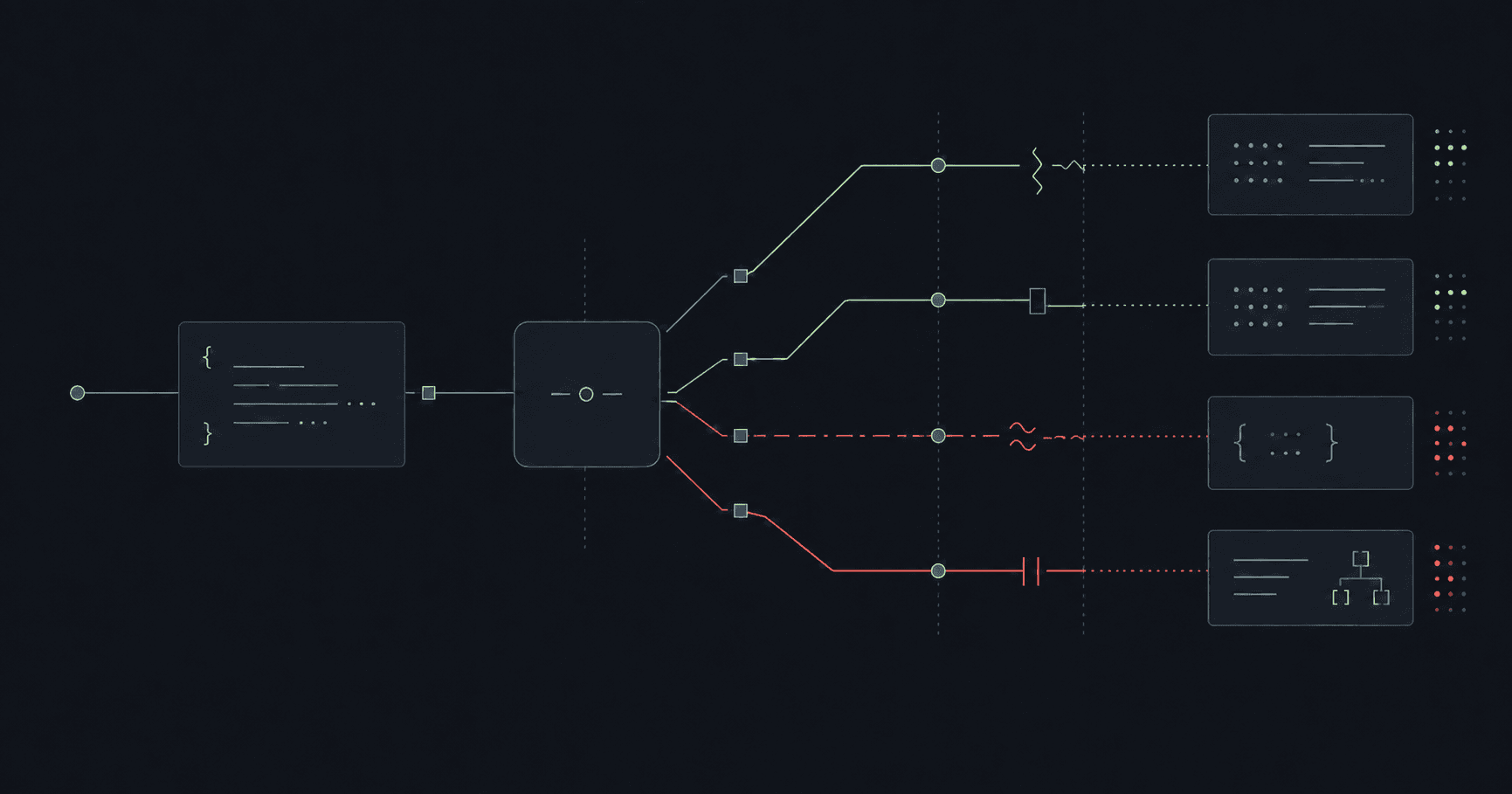
One API for All LLM Providers: What Silently Breaks
Why teams want a single API for multiple LLM providers, how OpenAI compatibility became the standard, and where that compatibility quietly breaks.
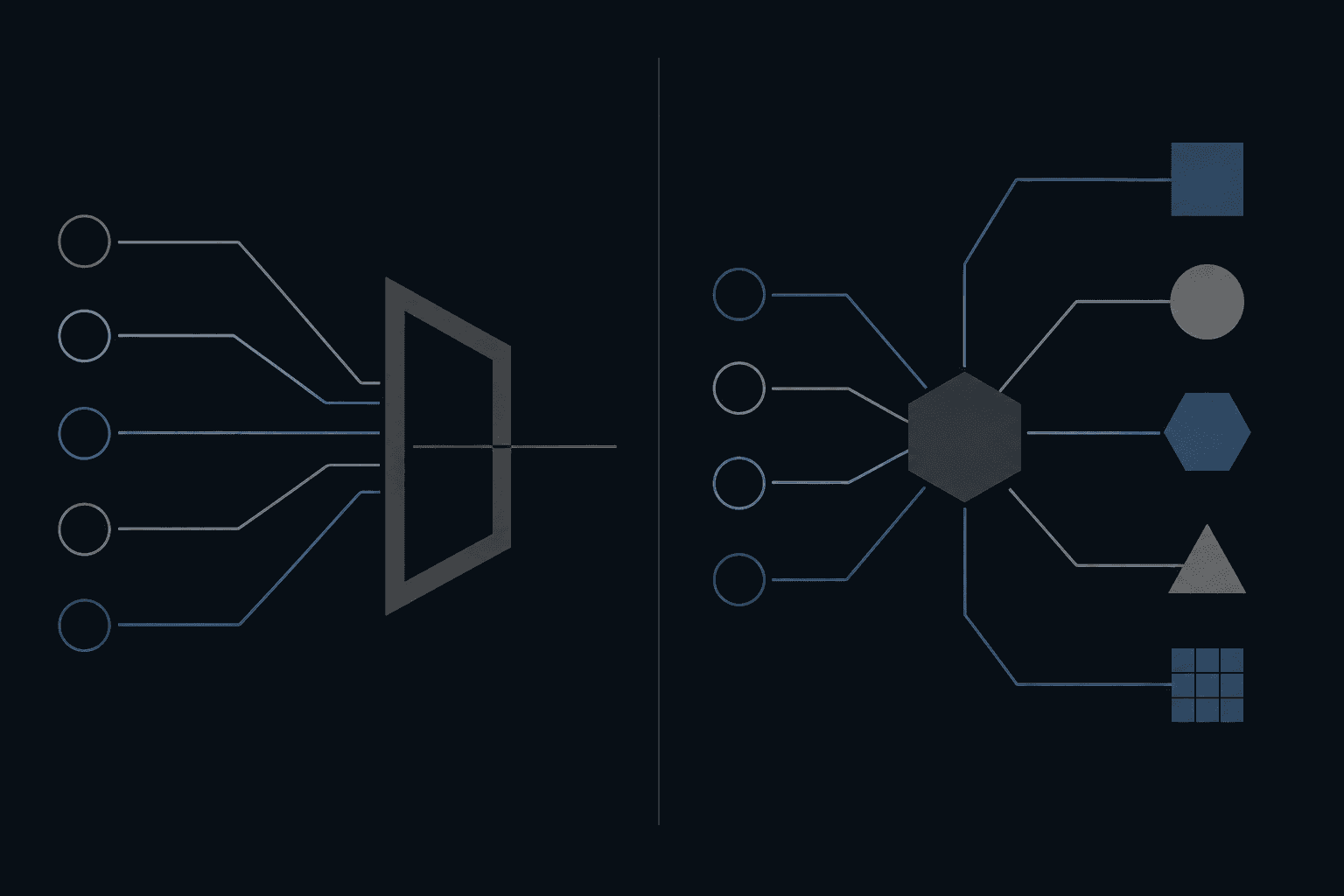
LLM Gateway vs LLM Router: What Each Layer Actually Decides
LLM gateways and LLM routers sit in the same place in the stack but decide different things. How to tell them apart, and which one your workload needs.
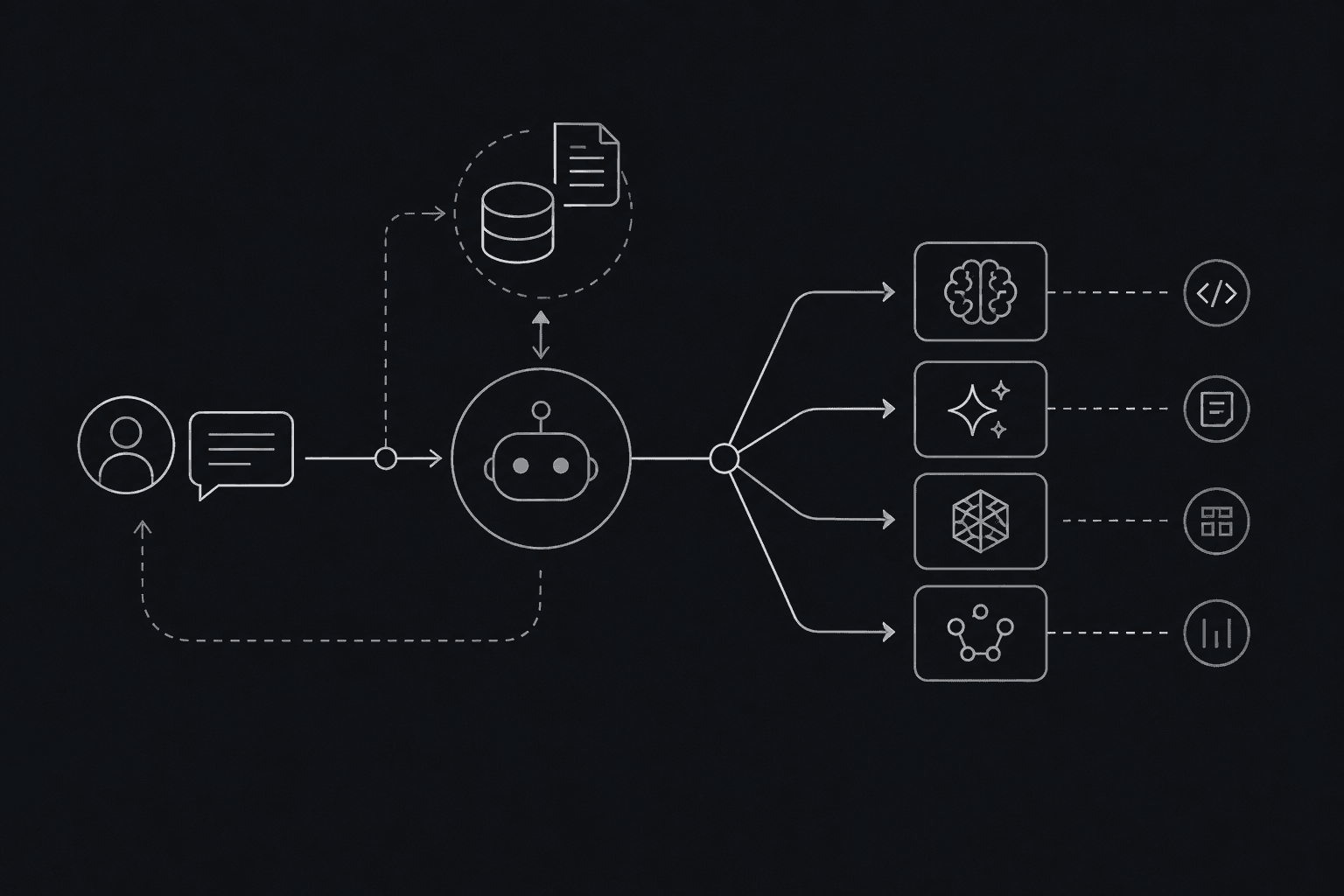
Model Routing for Agentic RAG: A Practical Guide
Agentic RAG puts the model in the loop before and after retrieval. Where routing fits per call, how the tool-driven loop routes, and how to wire embeddings on the same API.
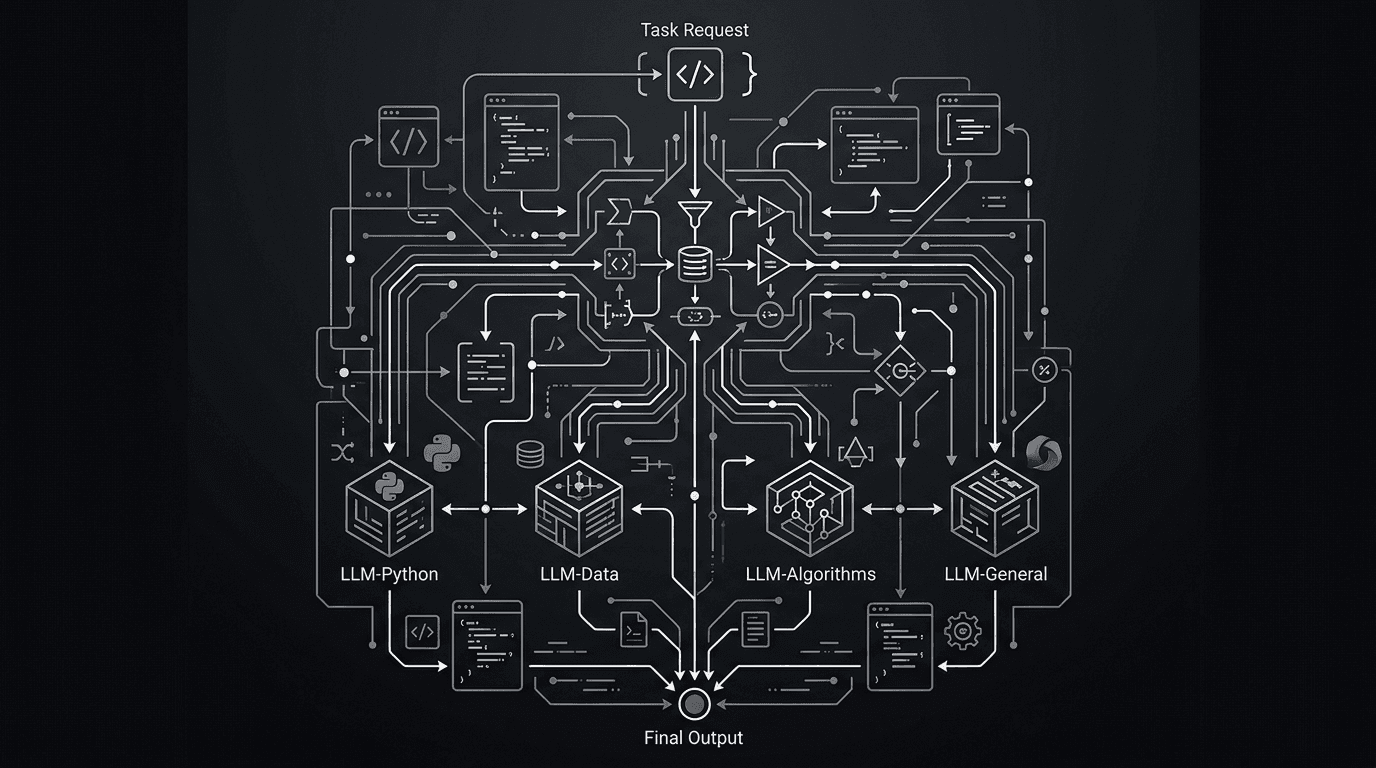
Model Routing for Coding Agents: A Practical Guide
Where a routing layer fits in a coding agent: why the tool-calling loop usually pins, how tool calls route when it does not, and how to audit every step.
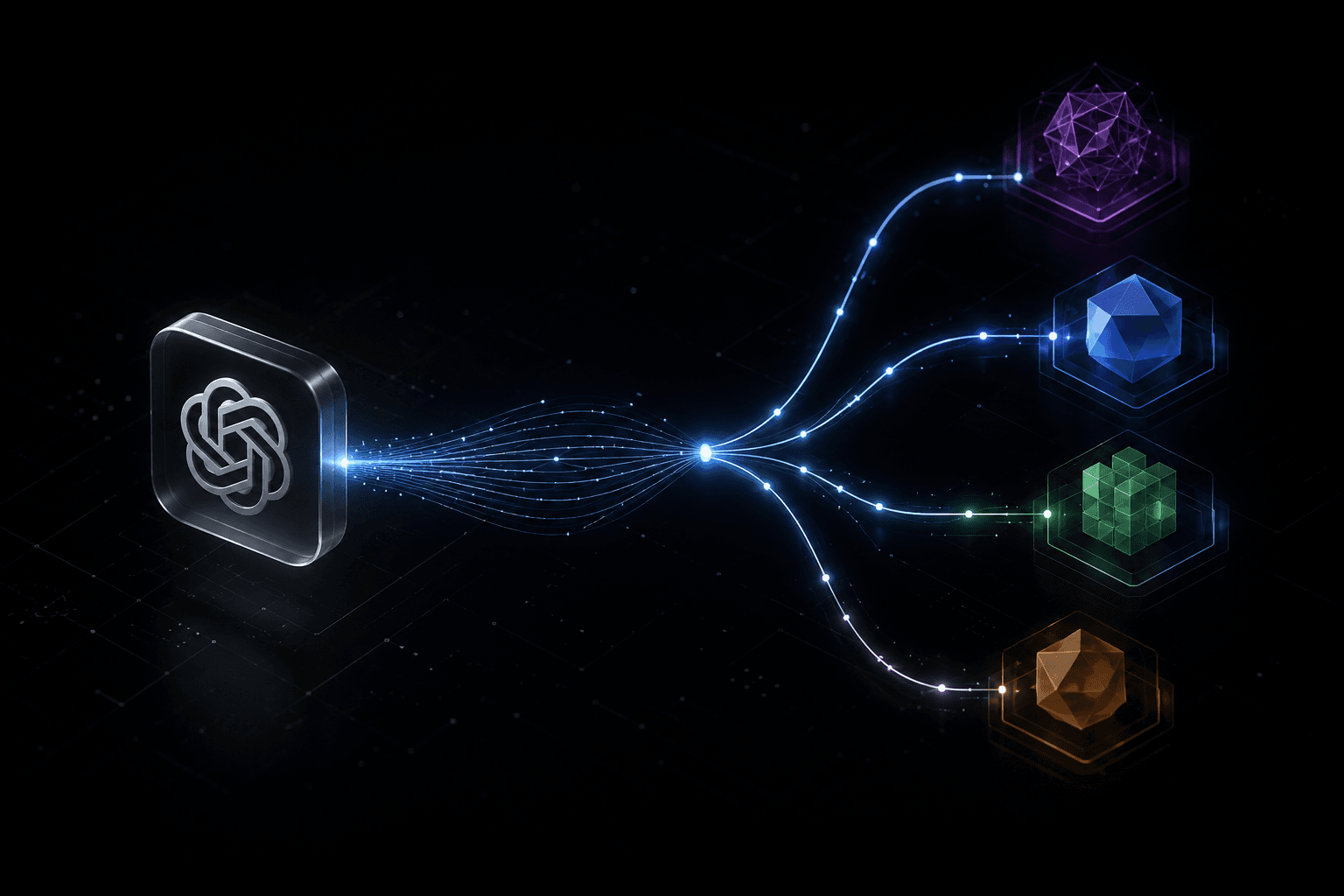
How to Route OpenAI SDK Calls Across Multiple Models
A working migration guide: point your existing OpenAI SDK calls at a routing layer, decide per call site between auto-routing and pinning, and verify the cutover.
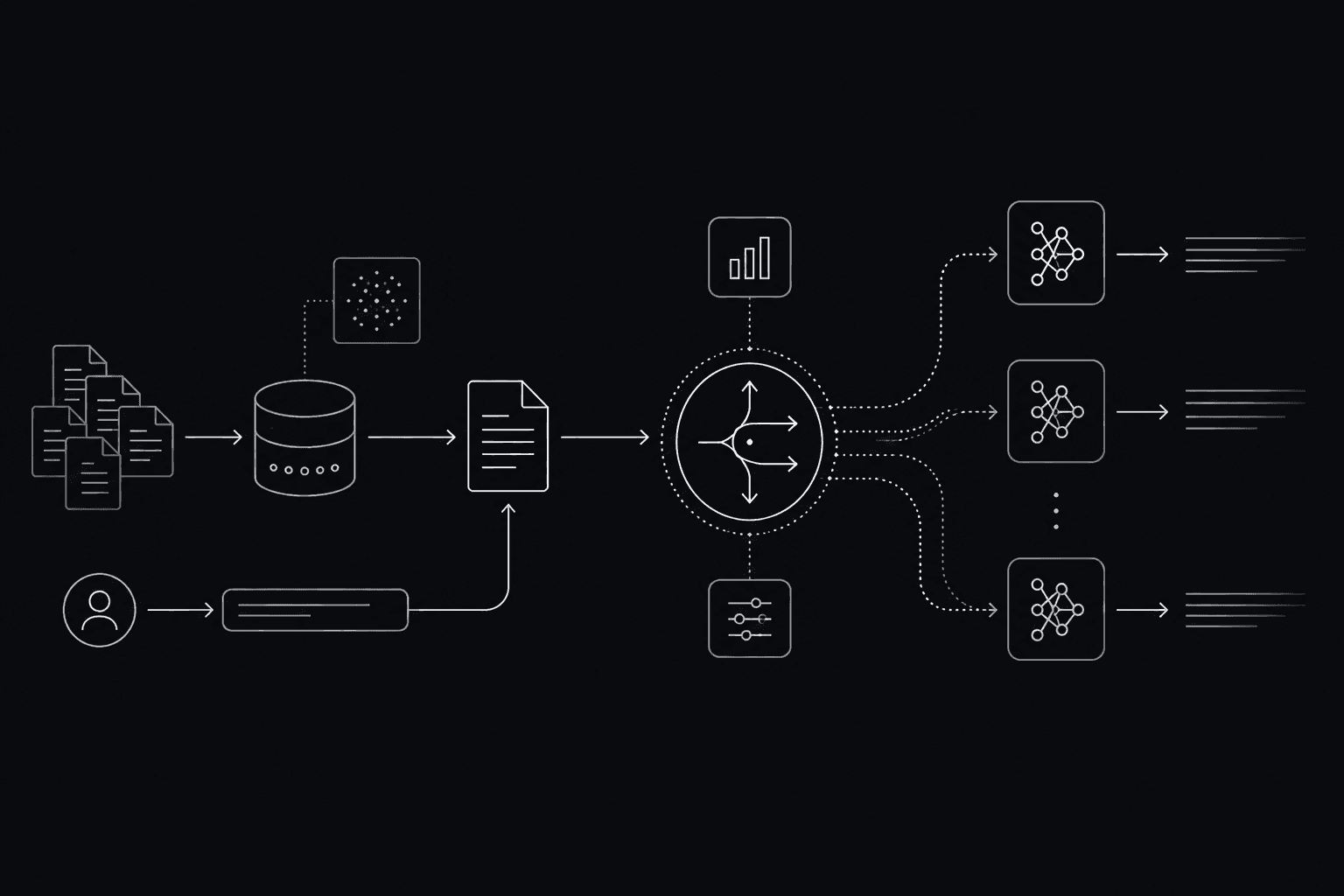
Model Routing for RAG Systems: A Practical Guide
Where a routing layer fits in a RAG pipeline: route the generation call by per-query difficulty, keep retrieval in your stack, and handle the privacy step correctly.

Silent Model Swaps: The -latest Trap in LLM APIs
LLM providers re-point aliases, recycle retired model names, and sunset versions on short notice. What our catalog pipeline observed, and how to keep a model identifier from changing meaning underneath you.

LLM Fallback Chains: Designing for Outages, Rate Limits, and Deprecations
A single model provider is a single point of failure. How fallback chains keep an AI feature serving through 429s, outages, timeouts, and model sunsets, and the design mistakes that quietly make reliability worse.

Prompt Caching Explained: What Cuts Your Bill and What Breaks It
Prompt caching can cut input-token costs by up to 90%, but only when the cached prefix stays identical. How it works across providers, and why caches silently miss.

Structured Outputs and JSON Mode: Getting Reliable JSON From an LLM
JSON mode guarantees valid JSON. Structured outputs guarantee the right shape. How constrained decoding works, how the major providers differ, and why a model can still hand you broken JSON.

What Are Embeddings? How Text Becomes Vectors of Meaning
Text embeddings turn words and documents into vectors so meaning can be measured by distance. How they are produced, what they power, and where they fall short.

What Is Tokenization? How Language Models Read Text
Before a model can read or write a single word, text is broken into tokens. How tokenization works, why subword units won, and why tokens decide both cost and context limits.

Quantized, Distilled, or Fine-Tuned: What the Labels Mean
Model quantization, LoRA, distillation, and fine-tuning are not interchangeable. A practical guide to what each label does and whether the original benchmark still applies.
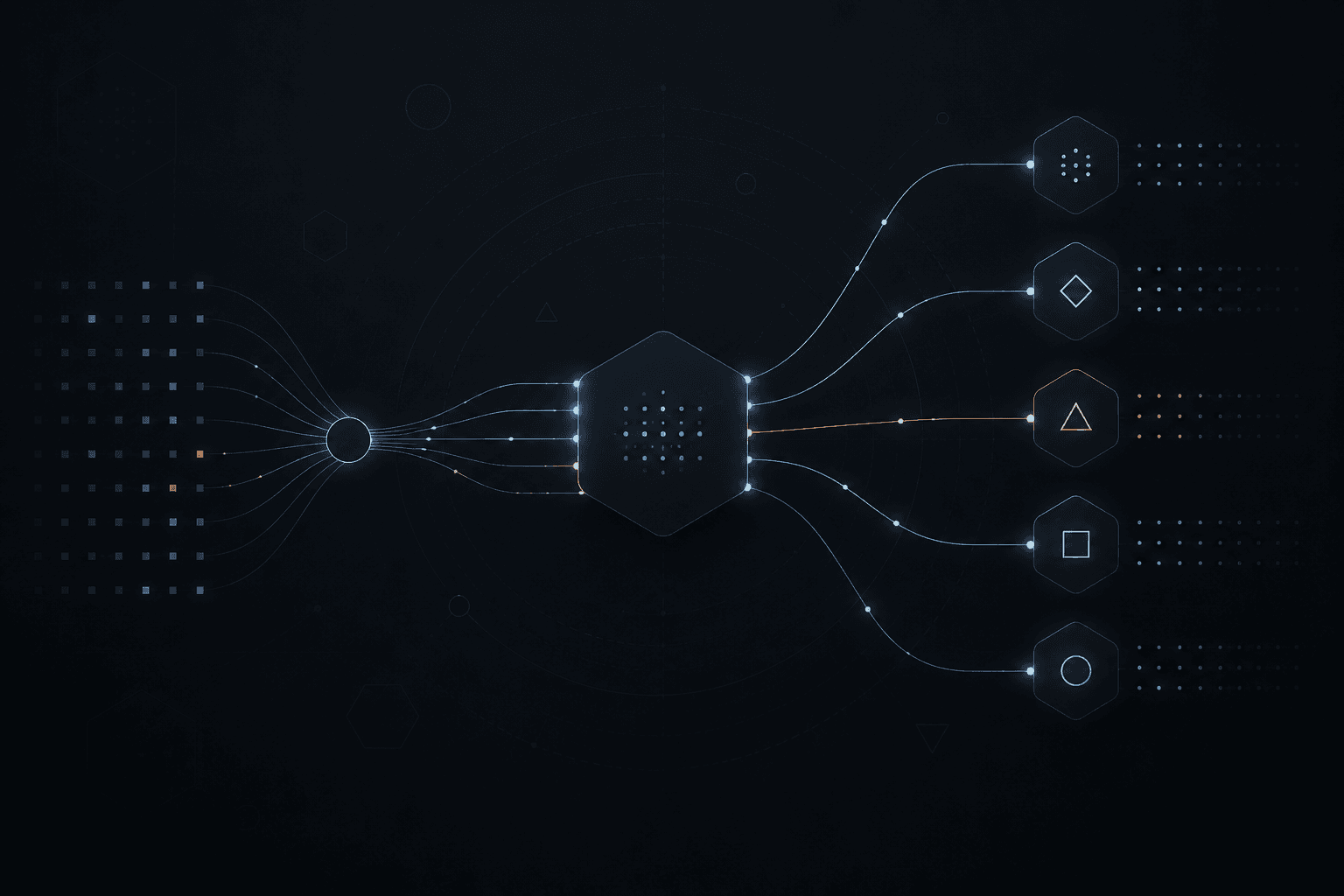
What Is Model Routing? Matching Every Request to the Right Model
What model routing is and how it works: sending each request to the best LLM on quality, cost, and latency, and what separates real routing from fallbacks.

What Is a Context Window? How LLM Context Limits Work and Why the Headline Number Misleads
What an LLM context window is, how tokens are counted against it, why bigger windows cost more, and how to work within limits without losing quality.

The Real Cost of Inference at Enterprise Scale: A 2026 Pricing Audit
A cross-provider audit of LLM inference pricing in May 2026, applying the four-factor cost framework to real numbers across frontier models, open-model providers, and self-hosted GPUs.

How Close Are Roofline Estimates to Real vLLM Benchmarks?
We benchmarked our GPU sizing estimates against real vLLM deployments: where the calculator matches measured throughput and VRAM, and where it diverges.

Why Most GPU Memory Calculators Are Wrong About KV Cache
Public GPU sizing calculators mostly haven't caught up to 2026 inference. Three specific things they get wrong: paged attention, FP8 KV precision, and Mixture-of-Experts memory.

Llama 3.3 70B Sizing Across H100, H200, and B200
Same model, three GPU generations. Here's how Llama 3.3 70B actually performs on H100 SXM, H200, and B200: VRAM headroom, throughput per dollar, and which tier makes sense for which workload.

Claude-Class Agent Workloads: When Self-Hosting Beats the Anthropic API
For agentic workloads built on Claude Sonnet or Opus, the self-host vs API decision is rarely about price. It's about cache mechanics, rate limits, and tail latency. Here's the full math.

Self-Hosting DeepSeek V3: What It Actually Costs
DeepSeek V3 is 671B total parameters with 37B active per token. Here's the realistic VRAM budget, GPU count, and monthly cost to serve it yourself, vs. what the API providers charge.

Sizing Llama 4 Scout for Production Inference
What it actually takes to serve Llama 4 Scout (109B total / 17B active) in production: VRAM budget, throughput per H100, monthly cost, and where most teams get the math wrong.

What Is Retrieval-Augmented Generation? How RAG Works and Why Most Production LLM Apps Use It
How retrieval-augmented generation grounds LLM answers in your own data: the pipeline, chunking and embedding choices, and where RAG beats fine-tuning.

What Are Small Language Models? Where the Sub-10B Tier Earns Its Keep and Where It Breaks
What small language models are, why 1-10B parameter open-weight models now power a large share of production AI, and when to choose one over a frontier model.

What Is Tool Calling? How LLMs Invoke External Functions and Why Agents Depend On It
How tool calling lets LLMs invoke functions and APIs: the request-response loop, schema design, common failure modes, and how to build reliable agents on it.

What Are Reasoning Models? How Test-Time Compute Works and Why It Costs More
What reasoning models are, how chain-of-thought at inference time changes quality and cost, and when o-series or R1-style models are worth the extra tokens.

AI Inference vs Training: The Technical and Economic Differences
The difference between AI training and inference: what each phase does, why inference dominates production cost, and what that means for infrastructure.

LLM Benchmarks Explained: What the Scores Actually Mean
LLM benchmark scores dominate model marketing, but most are saturated or contaminated. A practical guide to reading them critically before choosing a model.
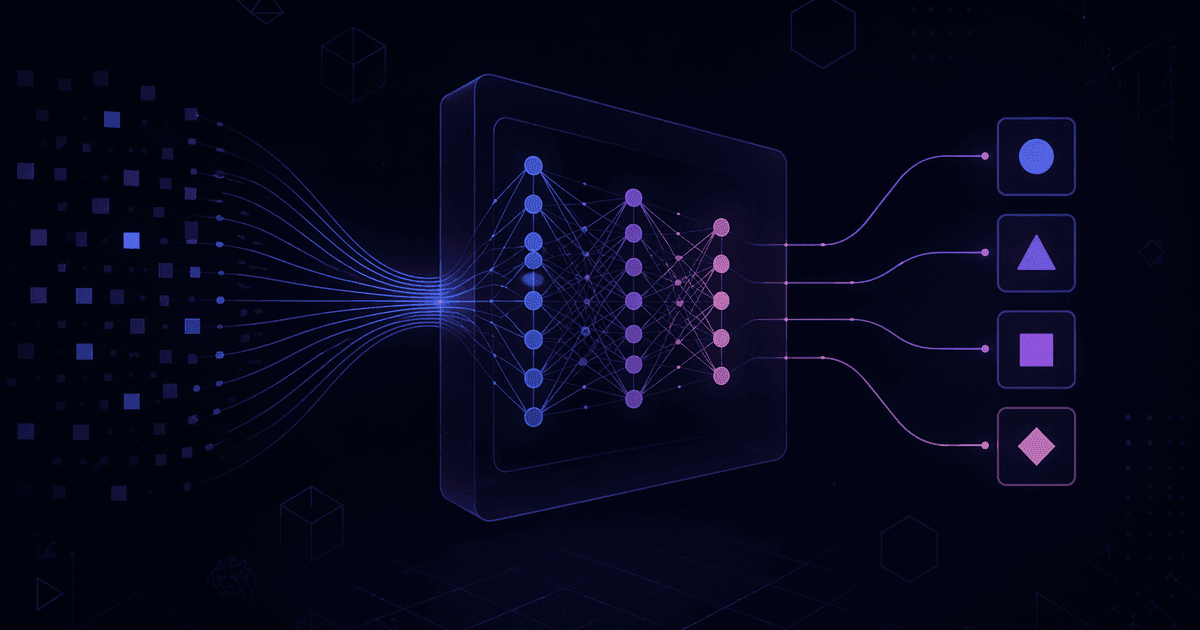
What is AI Inference? A Complete Guide
AI inference is the runtime phase where a trained model produces outputs from new inputs. It is the layer that dominates the cost, latency, and reliability of every AI-powered product in production.

The Hidden Costs of LLM APIs: What Token Price Tables Don't Show
The $/M token figure on LLM provider pricing pages represents roughly 60% of what teams actually pay in production. Caching, output ratios, rate limits, and reliability determine the rest.
Claude Opus 4.7: Output Verification, High-Resolution Vision, and Anthropic's Agentic Ambitions
Anthropic's Opus 4.7 verifies its own outputs, adds 3.75 MP vision, and a new xhigh reasoning tier. Benchmarks, pricing, and how it compares to GPT-5.4 and Gemini 3.1 Pro.

AI Model Comparison: How to Compare LLMs Across Benchmarks, Pricing, and Capabilities
A systematic framework for comparing AI models side by side. Covers benchmarks, pricing, context windows, capabilities, and when each comparison dimension matters most.

Best LLM for Coding in 2026: A Data-Driven Comparison
Which LLM is best for coding? We rank the top models by coding benchmarks, pricing, and context window to help you pick the right one.

Google Gemma 4: Architecture, GPU Requirements, and What It Means for Open-Source AI
Technical breakdown of Google's Gemma 4 model family: the 31B dense, 26B MoE, and on-device E2B/E4B variants. GPU memory requirements, benchmarks, and where each model fits.

How Our AI Model Recommendations Work
How the 70/25/5 scoring model ranks AI models for your use case, with tag matching, capability analysis, and priority weighting.

How Our GPU Capacity Planning Calculator Works
Every formula and assumption behind our GPU capacity planning tool, covering model memory, KV cache, throughput, latency, and parallelism.

How to Choose the Right AI Model for Your Project
A framework for picking AI models by task fit, cost, latency, and context window. Includes routing, fallback chains, and evaluation methodology.

GPU Sizing Guide for LLM Inference in Production
Calculate GPU memory for LLM inference, pick the right hardware, and keep cloud costs under control with sizing formulas and tables.

7 Proven Strategies to Cut Your LLM API Costs by 80%
Reduce LLM API costs with model routing, prompt optimization, caching, and batching. Practical techniques that cut spending without losing quality.
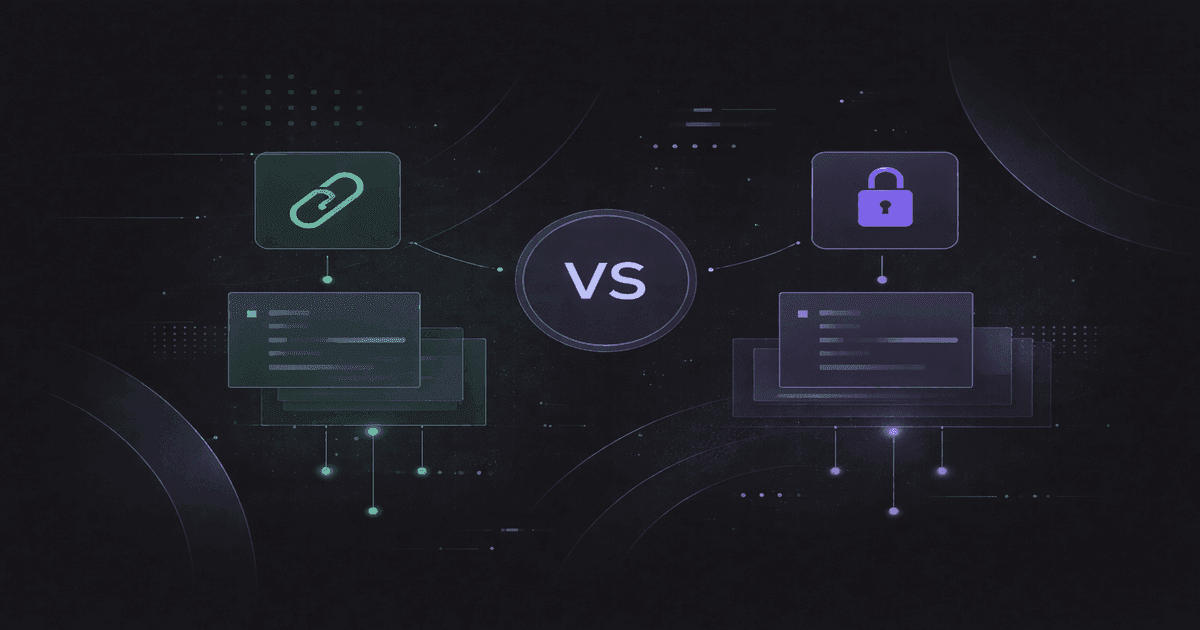
Open Source vs Proprietary LLMs: Which Should You Choose?
Compare open-source and proprietary LLMs on cost, performance, privacy, and customization to pick the right approach for your use case.
Put intelligence in the middle.
One gateway in front of every model, with your policies applied and every decision on record. Start on the free plan with 5,000 requests a month, no card required.